
Click here to read the full story
In rural Minnesota, access to highly specialized cardiac care can be limited by distance and time. To help close that gap, M Physicians and Fairview launched a helicopter‑based ECMO program that allows specialized cardiac teams to travel directly to community hospitals and work alongside local clinicians when patients need advanced support. Through this approach, patients can receive complex, life‑sustaining care without first being transferred long distances, while local teams are supported by academic expertise on site.
The program brings together technology, coordination, and clinical expertise to make advanced cardiac care more accessible across the state. By connecting rural hospitals with specialized teams through a shared system of care, M Physicians and Fairview are helping ensure patients receive the right level of care, at the right time, no matter where they live.
_________________________________________________________________________________
Every minute matters in cardiac arrest. Now, a first-of-its-kind program is saving those minutes—and giving more patients a chance to survive—at M Health Fairview Northland Medical Center and M Health Fairview Lakes Medical Center.
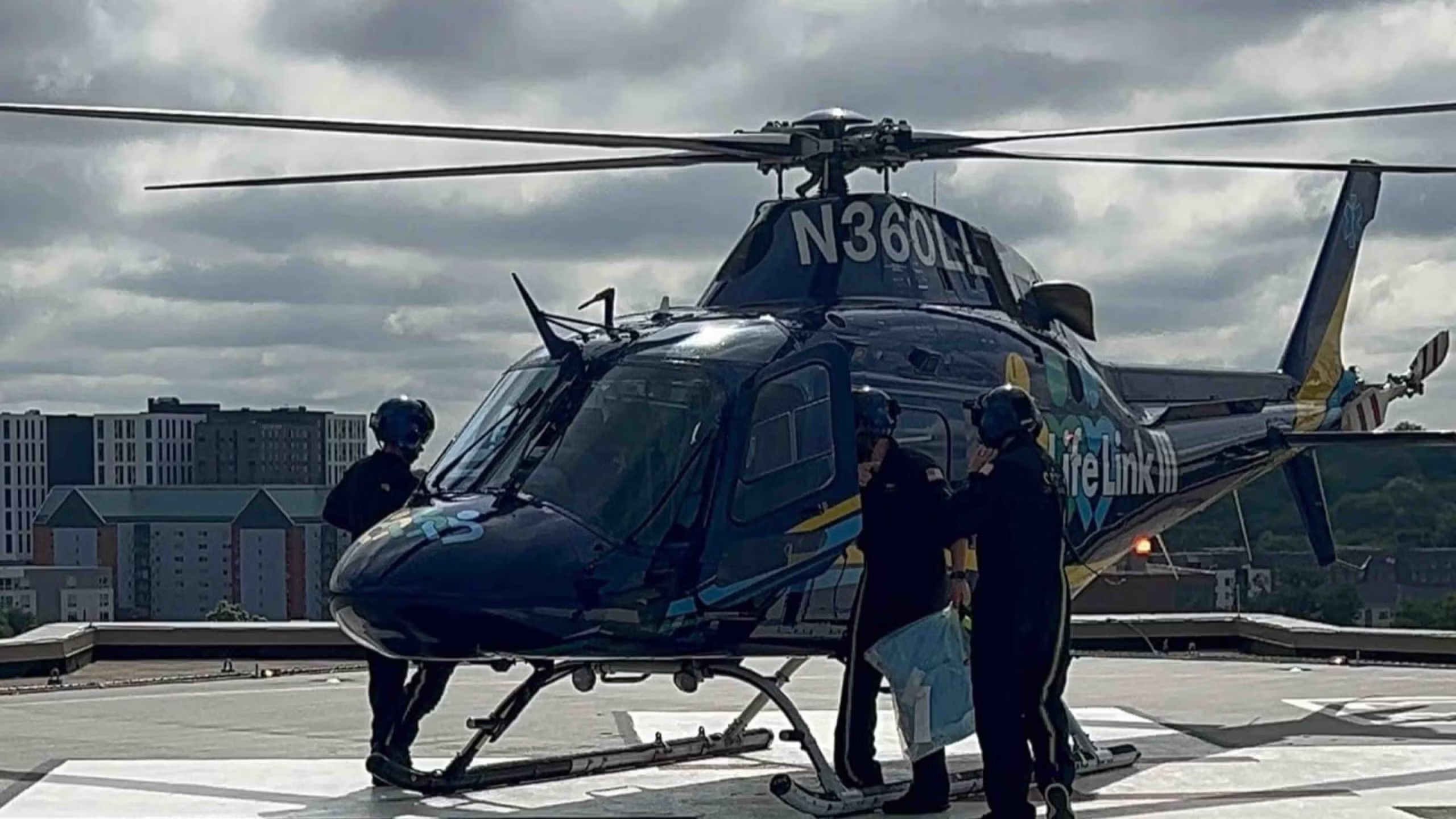
For the first time in the United States, a specialized ECMO (extracorporeal membrane oxygenation) resuscitation team is being flown by helicopter from M Health Fairview University of Minnesota Medical Center (UMMC) directly to the emergency department at one of the rural hospitals.
Once on site, a physician initiates ECMO—a life-support system that temporarily takes over the work of the heart and lungs during and after cardiac arrest. After stabilization, the patient is transported to UMMC for advanced care.
“The survival rate is almost zero if you can’t get these patients on ECMO quickly,” said Jason White, RN, nurse manager of emergency services at Northland Medical Center. “This gives us another opportunity to save a life, and another family member will come home.”
Bringing ECMO to rural communities
Sudden cardiac arrest remains one of the most time-sensitive medical emergencies. In the United States, survival rates for out-of-hospital cardiac arrest are less than 12%.
ECMO is changing that.
For patients with shockable heart rhythms, ECMO can significantly improve survival when initiated quickly, with the greatest benefit seen when it’s started within the first hour. The sooner it begins, the better the chances.
UMMC, home to an internationally recognized ECMO Center of Excellence, has long been a leader in this advanced therapy. Through the Minnesota Mobile Resuscitation Consortium (MMRC), teams have already been delivering rapid-response ECMO care across the Twin Cities using ground transport.
Now, that same expertise is reaching rural communities.
With support from Life Link III, a helicopter transports the ECMO team and equipment directly from UMMC, while local EMS brings the patient to the nearest participating hospital. The teams meet in the emergency department, where ECMO can be initiated without delay.
A complex mission, built for speed
Jason Bartos, MD, interventional and critical care cardiologist at UMMC and associate professor at the University of Minnesota Medical School, is the ECMO physician leading this helicopter-supported program.
“I’m thrilled to bring this lifesaving care to the Princeton and Wyoming communities,” Bartos said. “Time is everything in cardiac arrest. By flying the equipment and expertise directly to the patient, we’re giving people in rural communities the same chance at survival as those in major cities.”
While CPR and automated external defibrillators (AEDs) remain essential first steps, they don’t always restore a heartbeat. In those moments, ECMO can provide a crucial bridge—circulating oxygen-rich blood and allowing care teams time to treat the underlying cause.
But ECMO is complex. It requires highly trained specialists to place large catheters into major blood vessels and operate sophisticated equipment. Because of these demands, most rural hospitals don’t have the capability to offer it on-site.
Until now.
Ready to save more lives
These expansions are made possible by a generous grant from The Leona M. and Harry B. Helmsley Charitable Trust, which supports initiatives that expand access to critical care in underserved areas.
The Northland Medical Center emergency department team is thrilled to bring this first-of-its-kind program to the community.
“We want this to be a model for around the world so that more lives can be saved,” White said.